brief
Study the grid systems of an existing magazine. Apply this system to create augmented reality and virtual reality components for the magazine.
grid analysis
To define the grid system of National Geographic magazine, I first deconstructed the cover layout of multiple issues. Ranging from the very first publications of the magazine to the most recent issue, I noticed many similarities. These similarities among the issues create a system and brand that allows us to easily recognize an issue of the National Geographic magazine.
click the images to enlarge
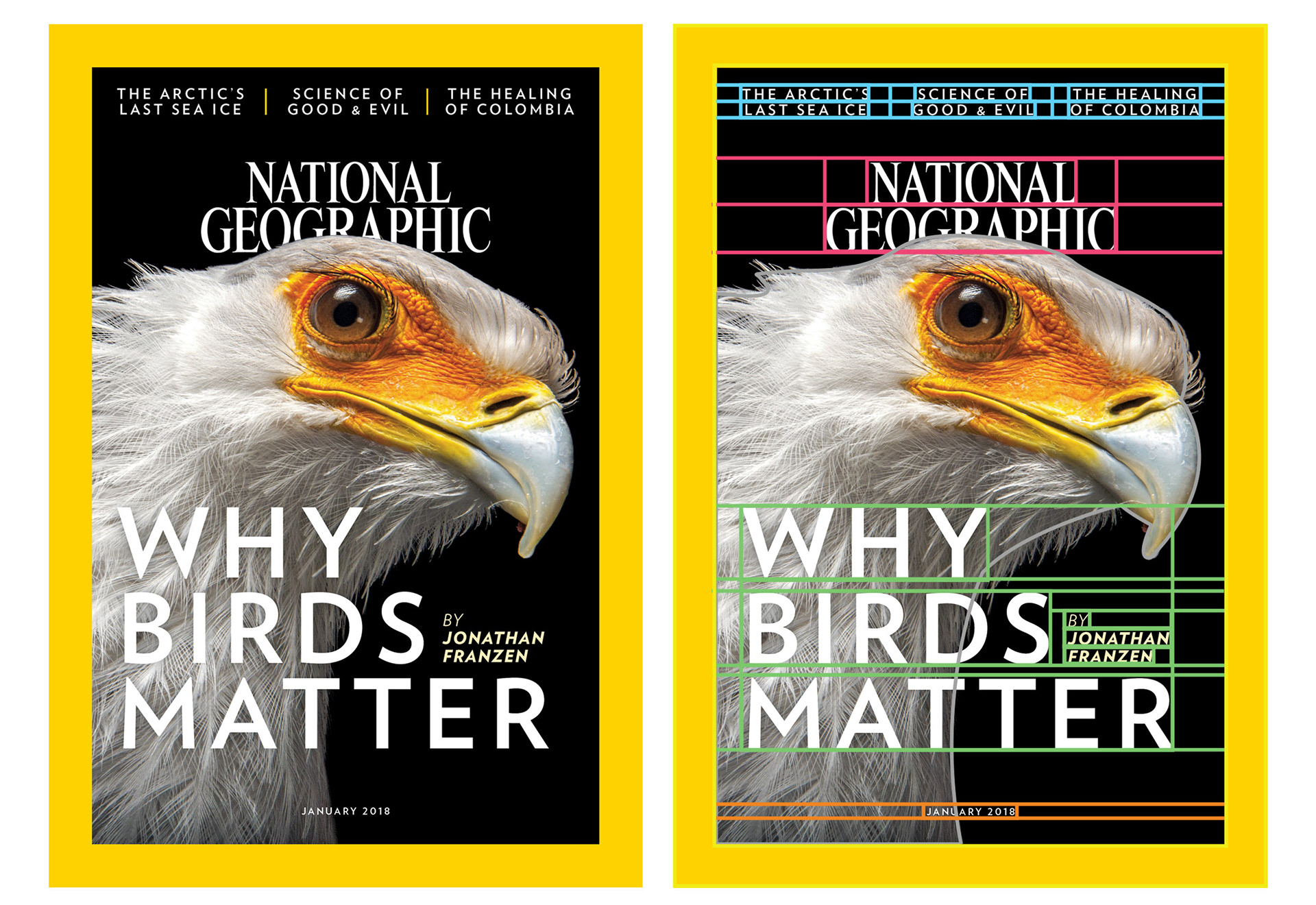
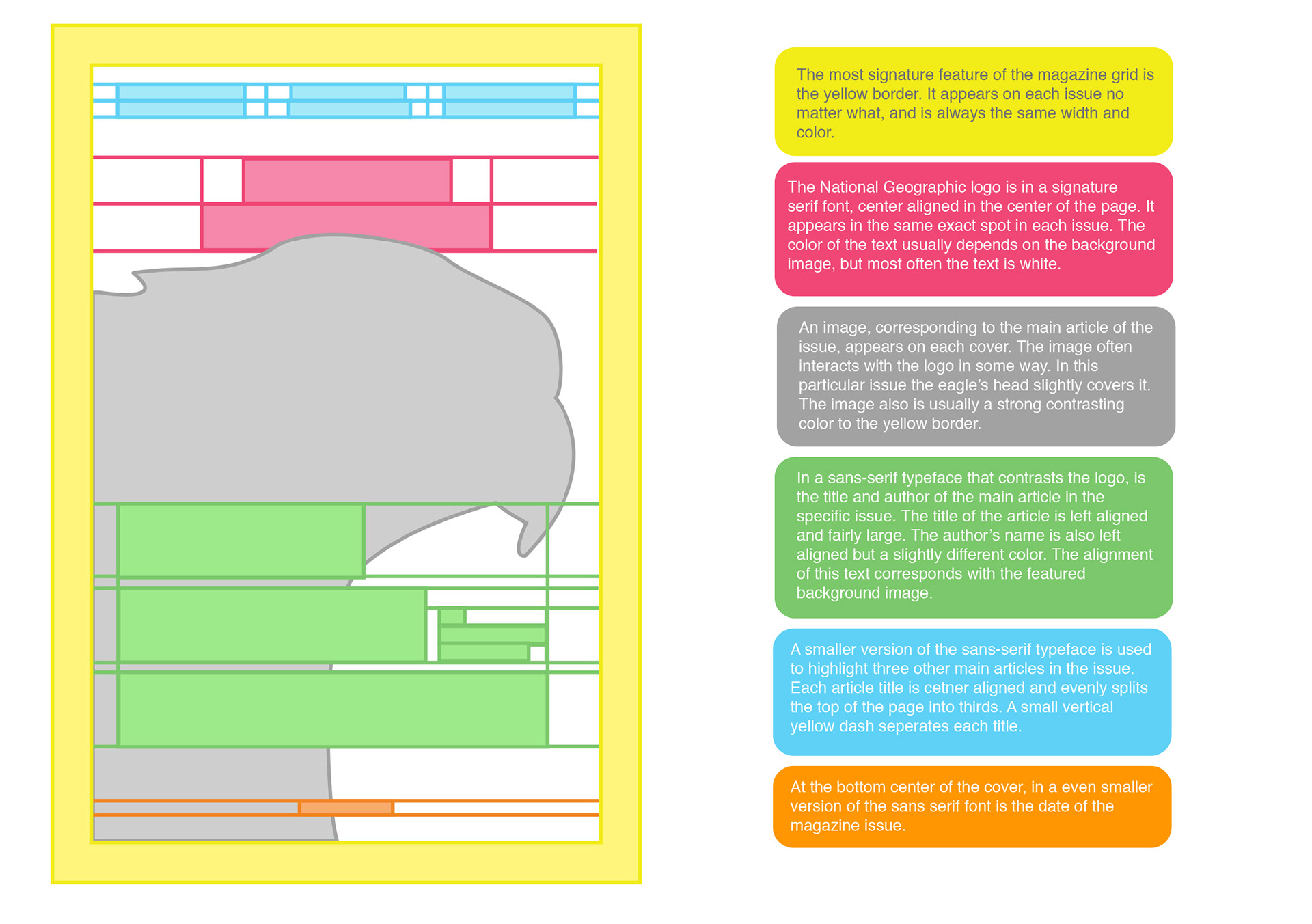
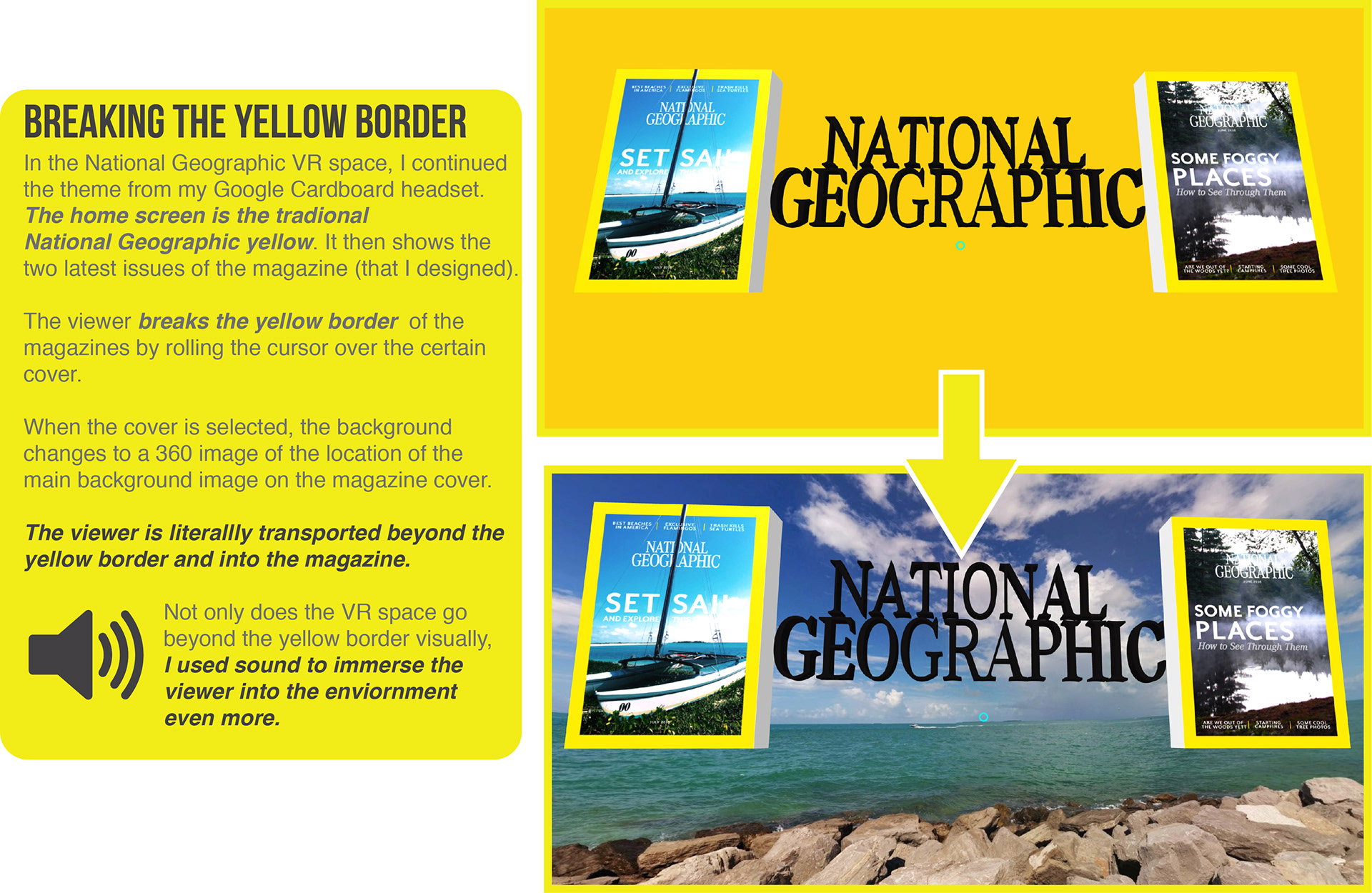
The main difference I saw between the older and newer magazine covers was a breaking of the grid, the central image would break through the signature yellow border. Applying this concept, I created my own two covers of the magazine, one of them “breaking” that yellow border.
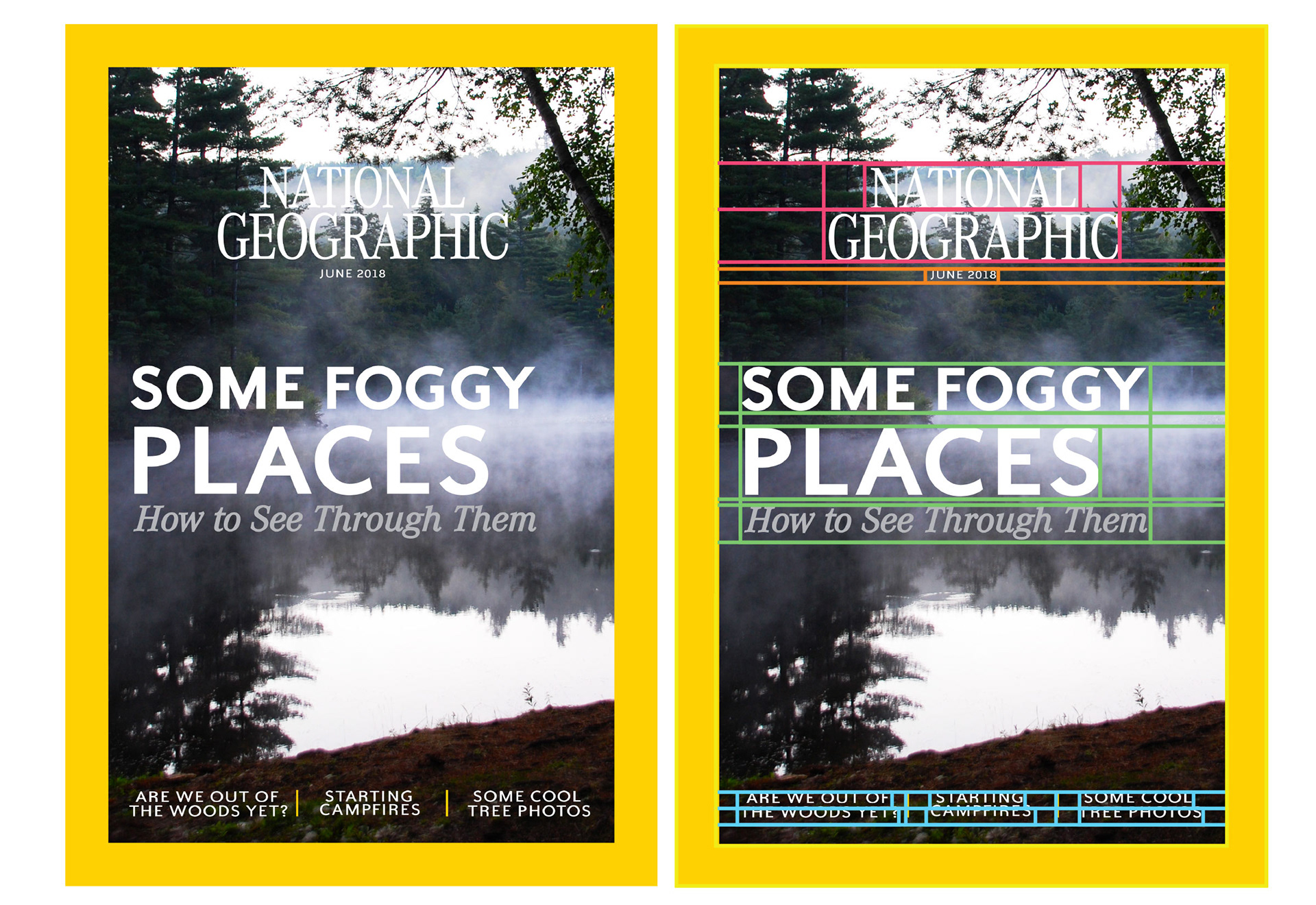
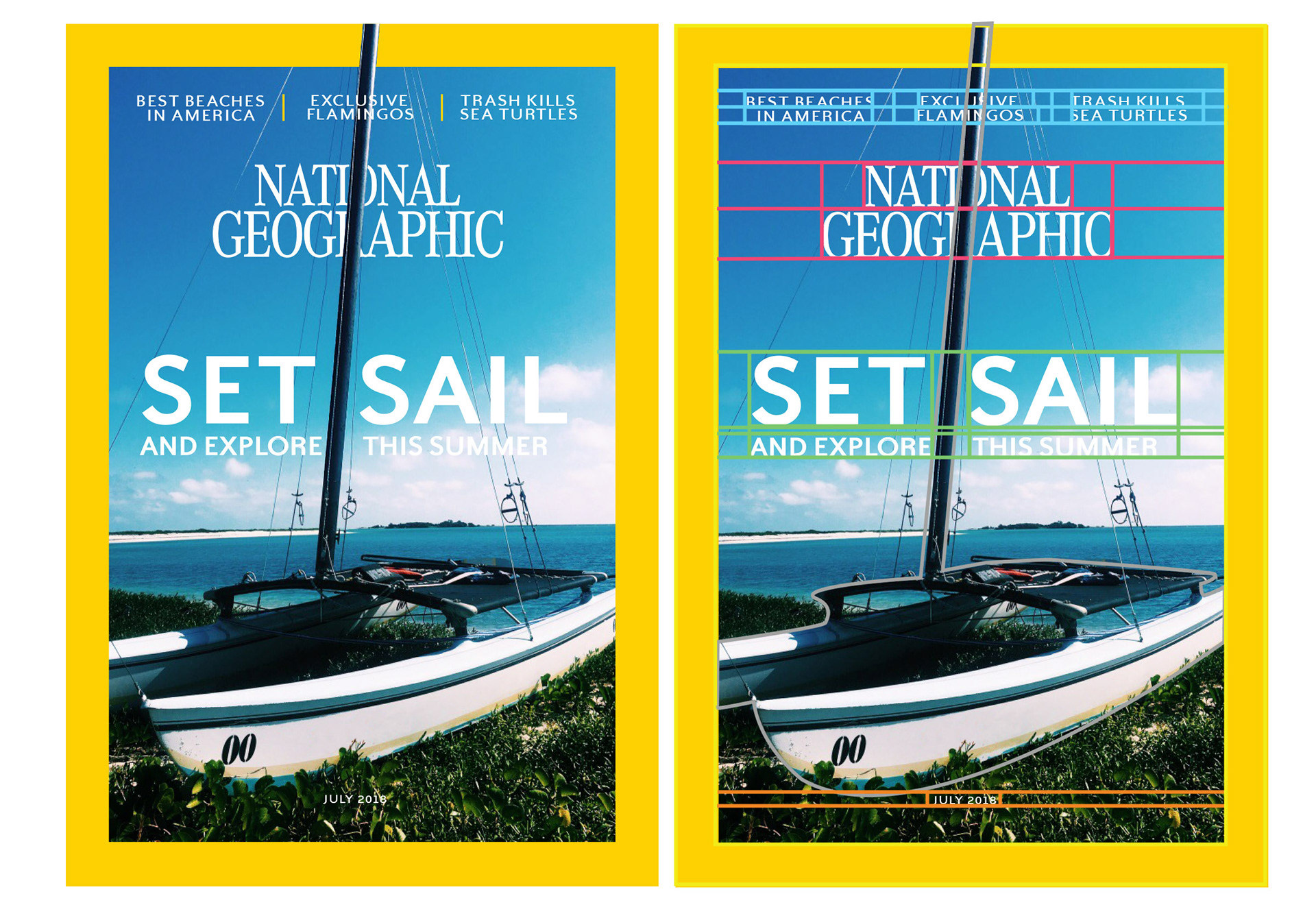
Credit for images used in covers: James Grobholz and Allison Marble
2D to 3D
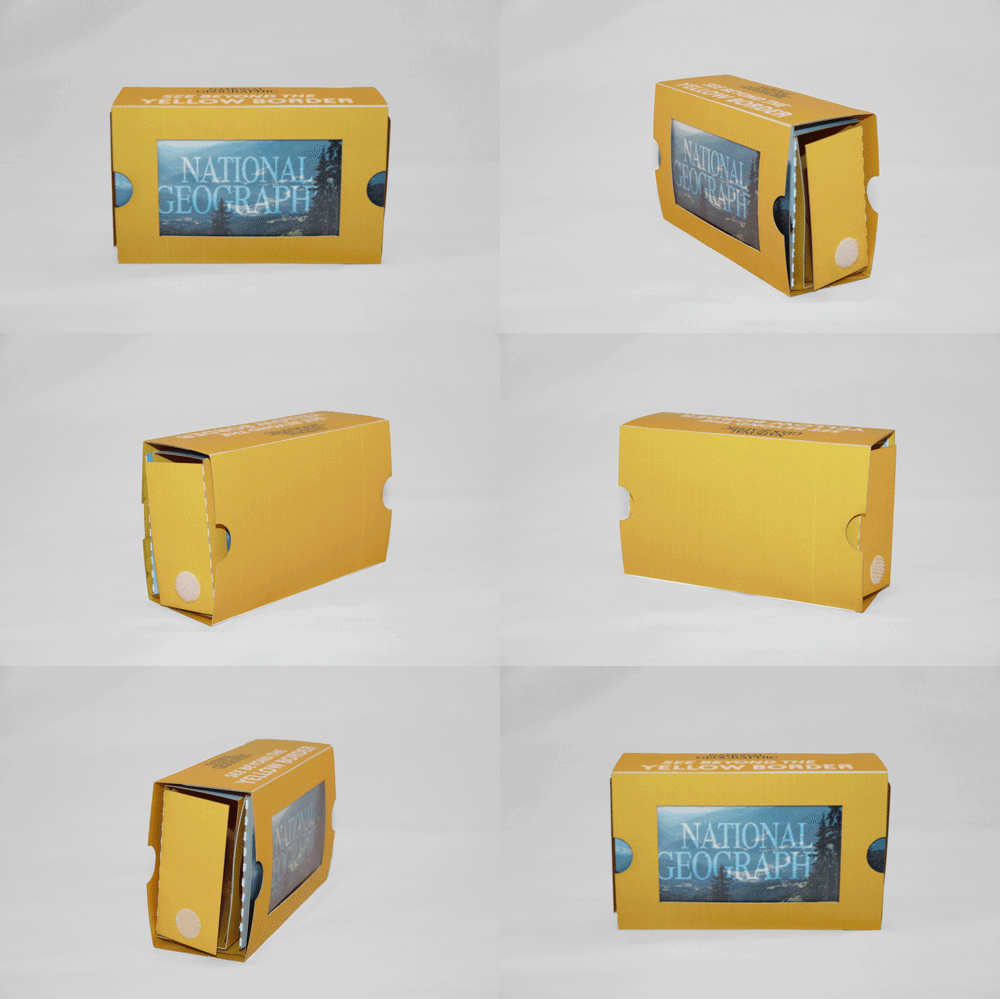
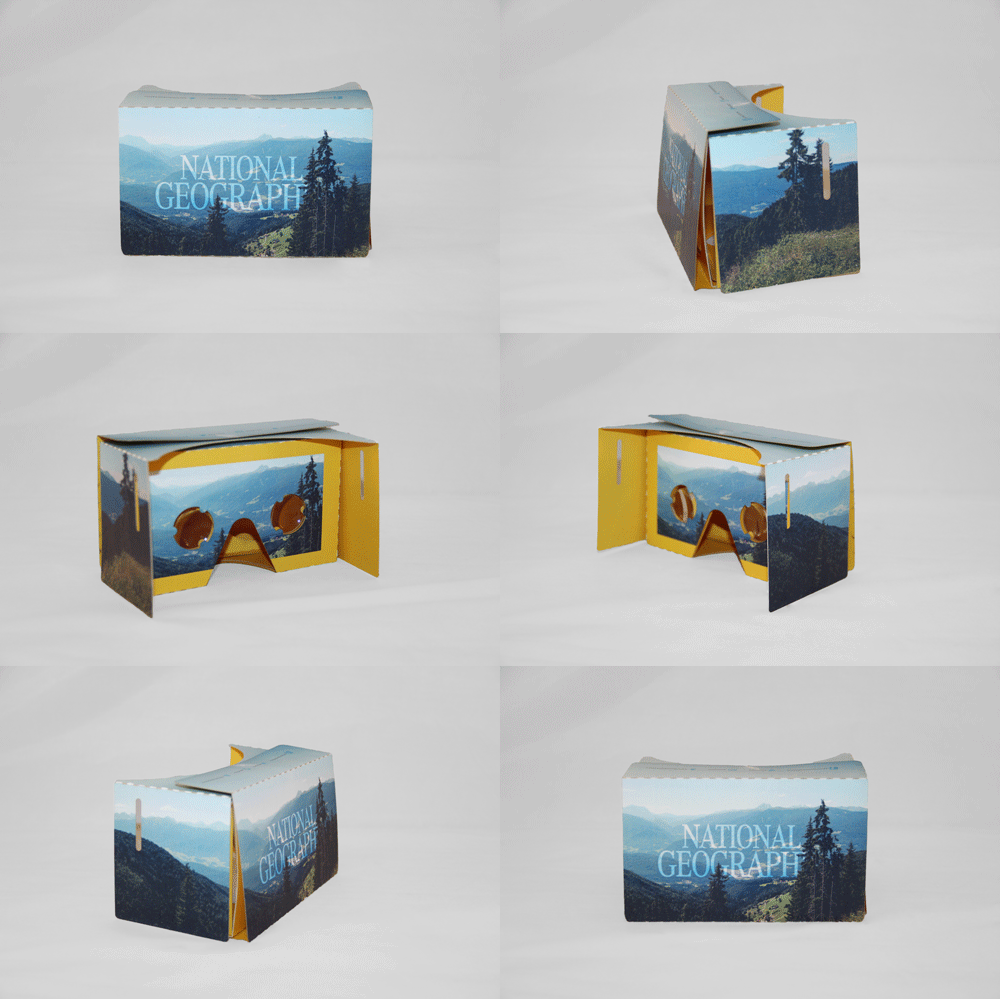
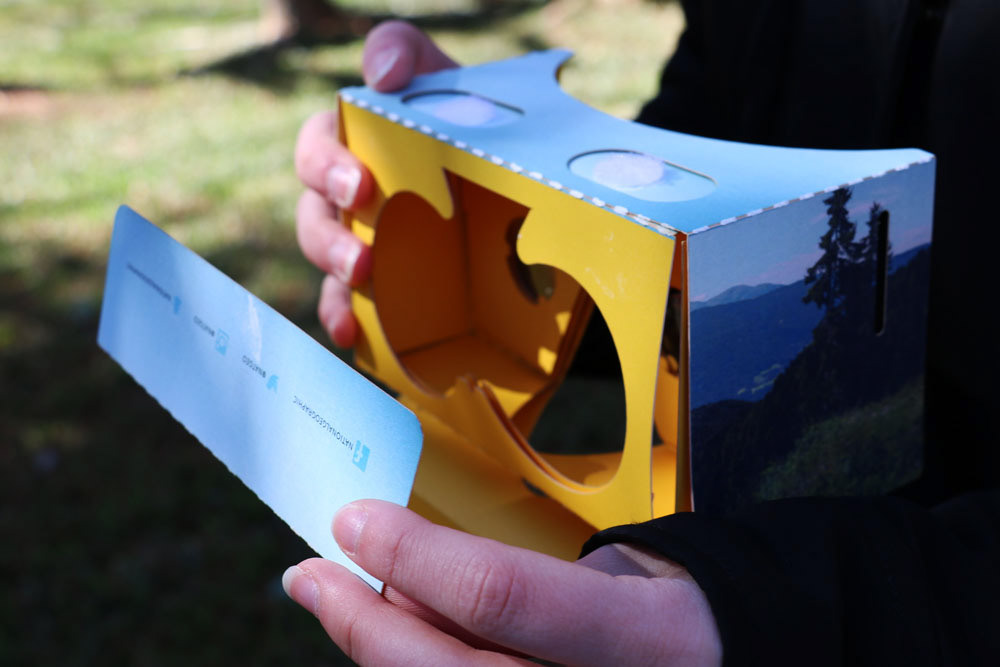
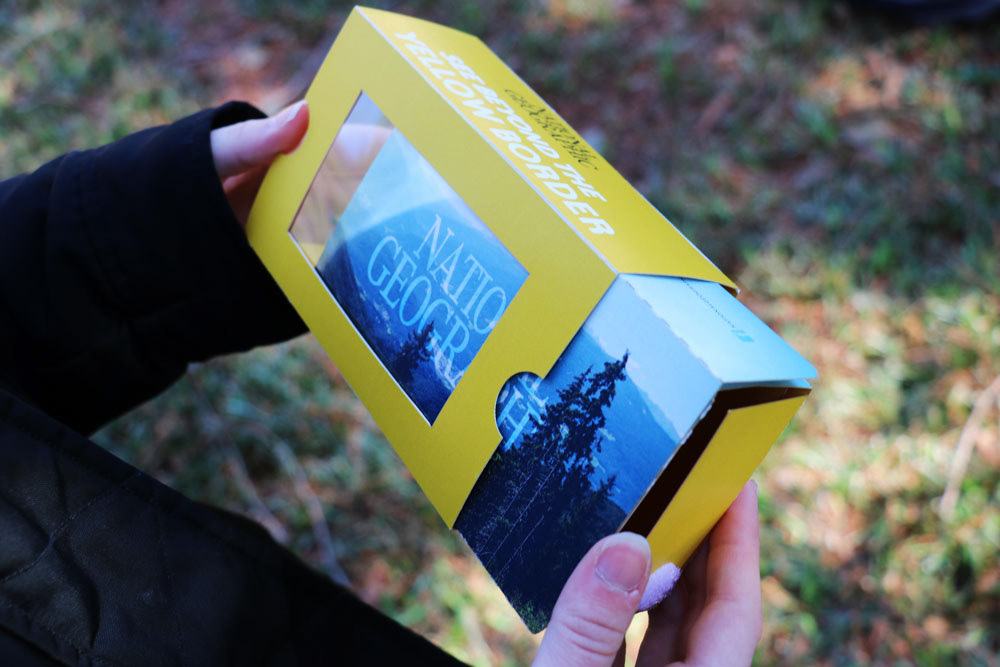
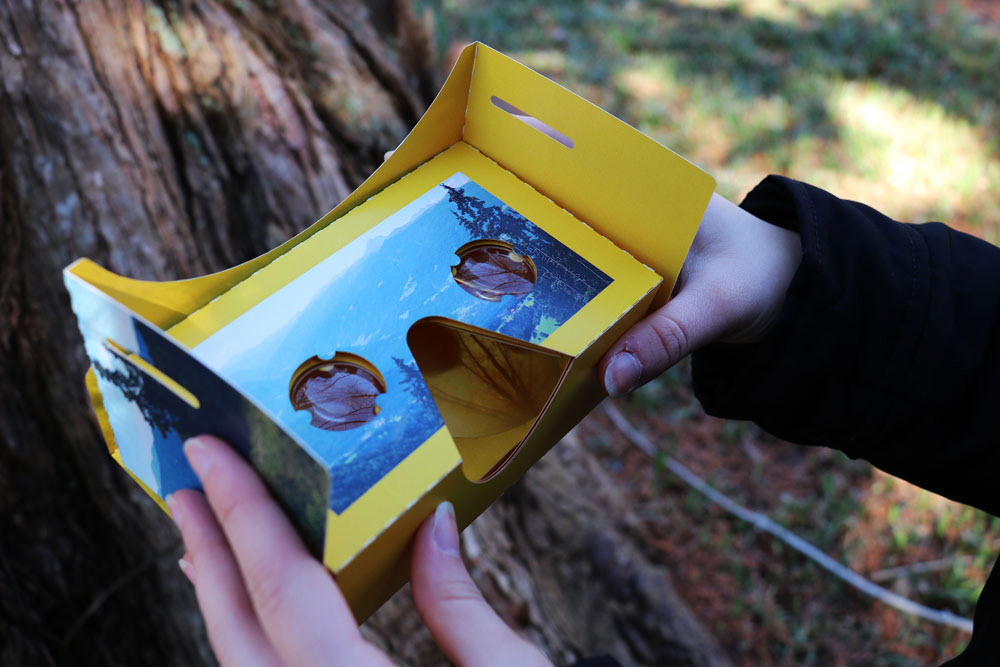
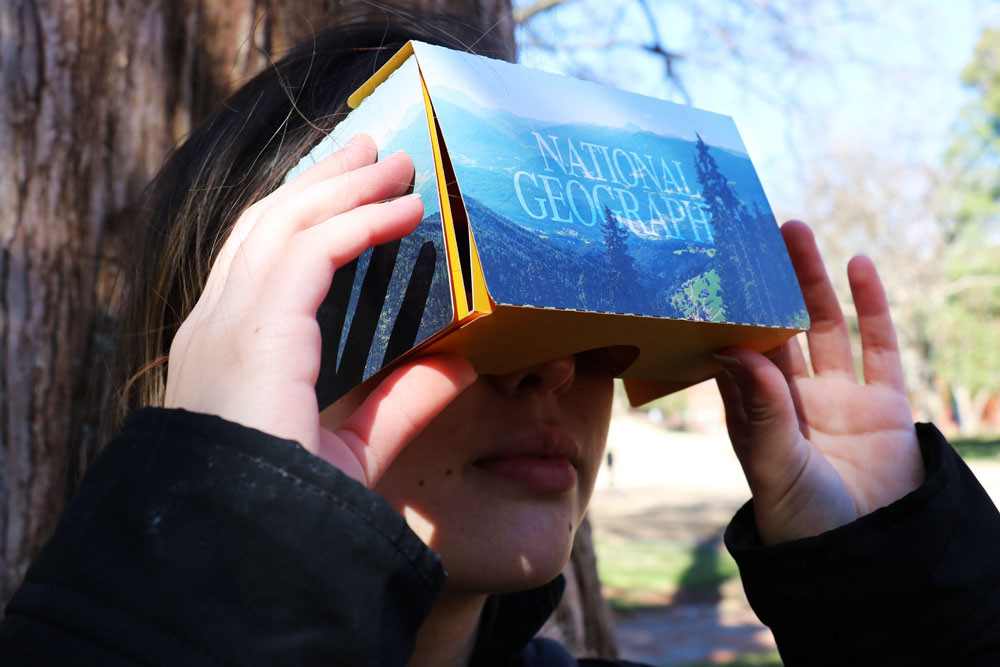
Using the grid defined from the magazine covers, these rules were translated to a 3D form: a Google Cardboard Virtual Reality headset.
I imagined National Geographic would call the possible virtual reality project “Seeing Beyond the Yellow Border”. Users would have the ability to explore the content of the national geographic magazine through more than just 2D pictures.
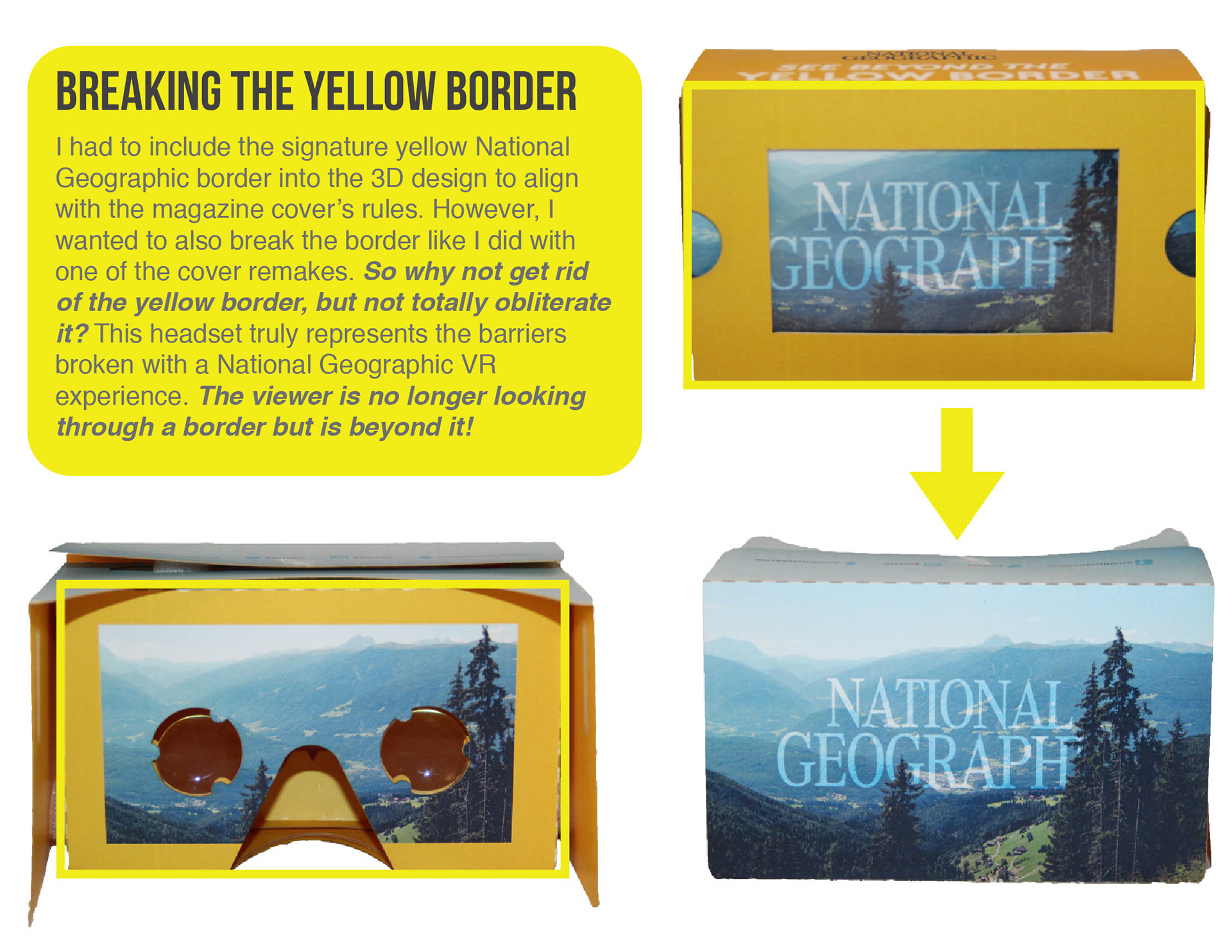
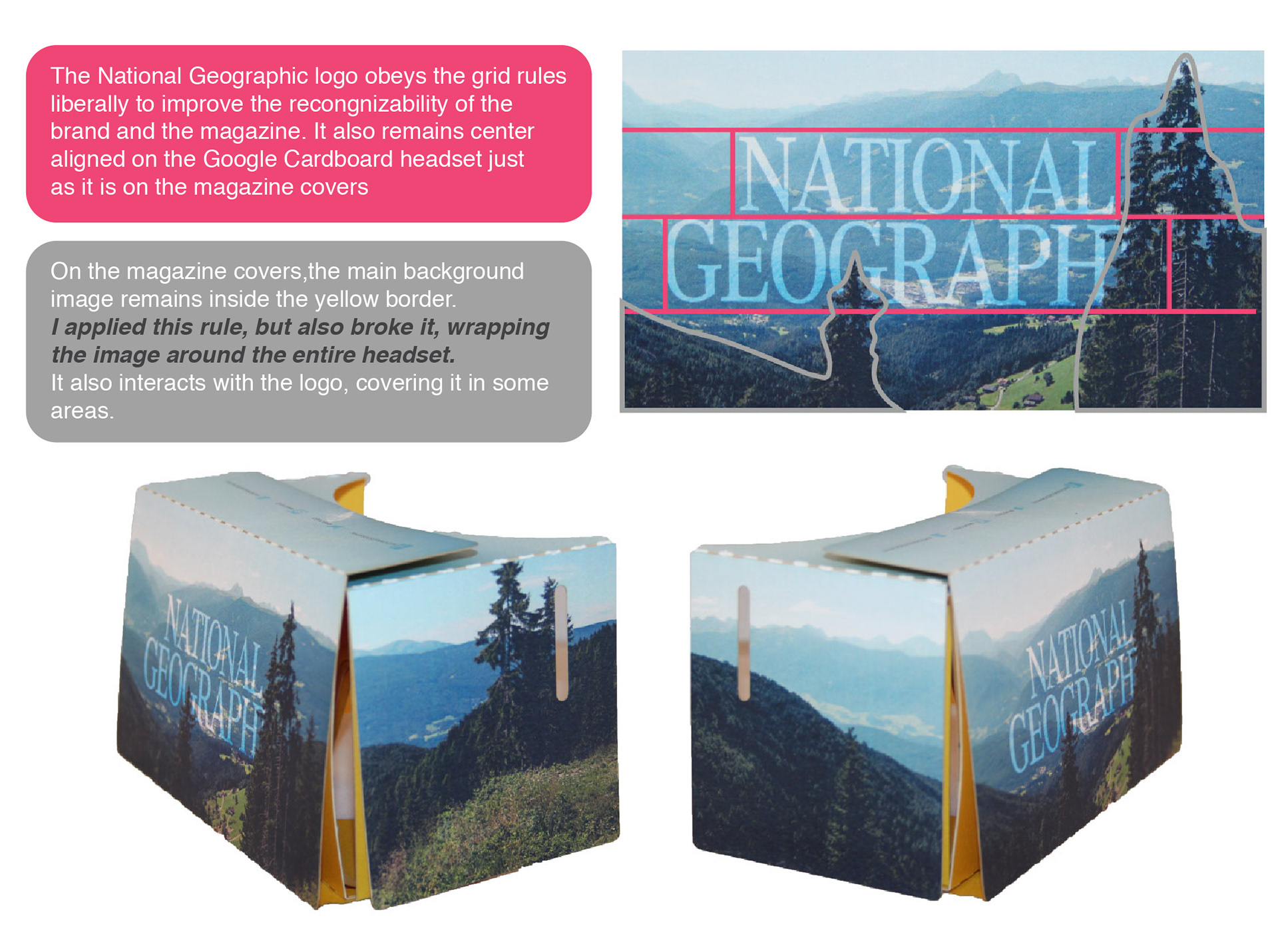
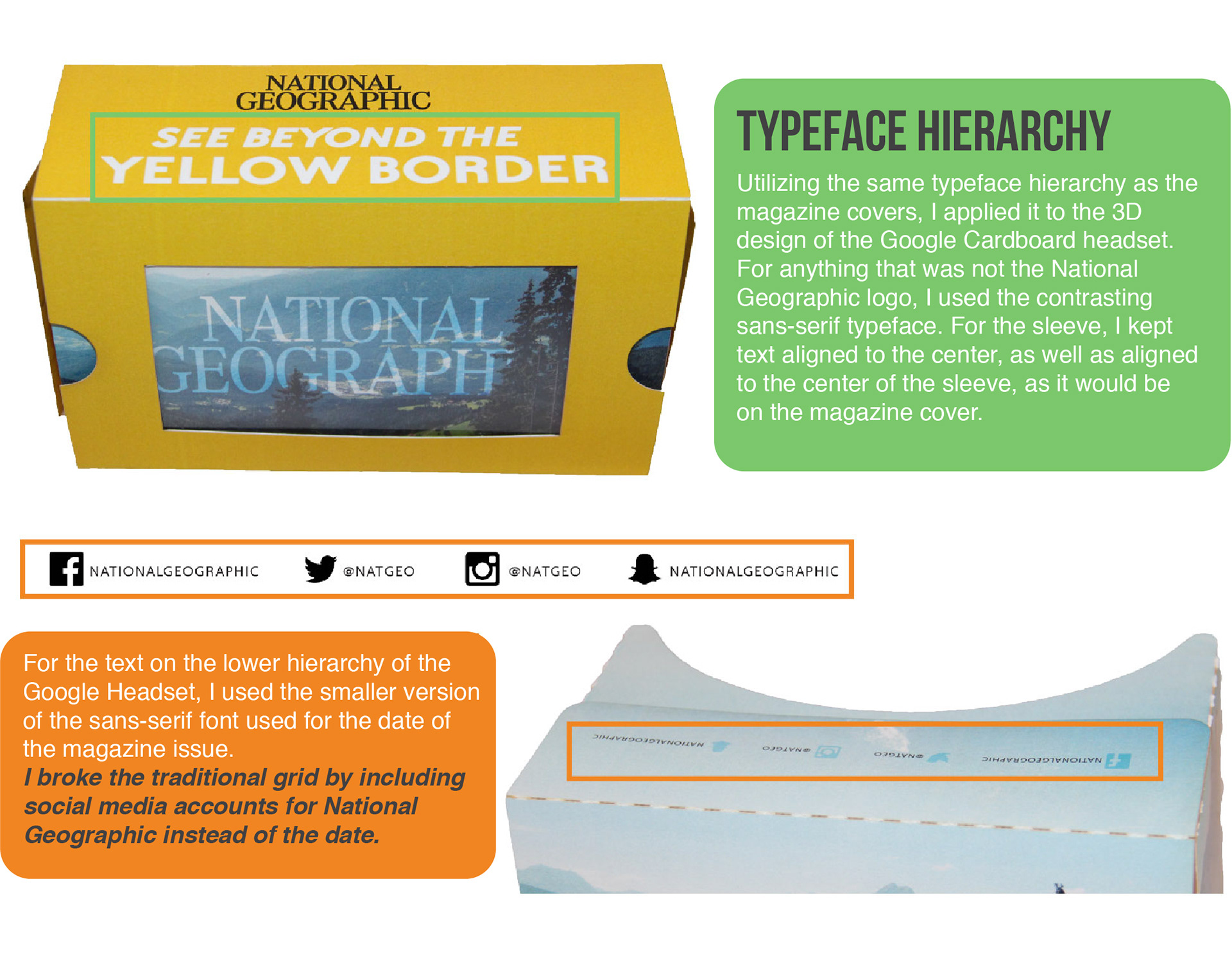
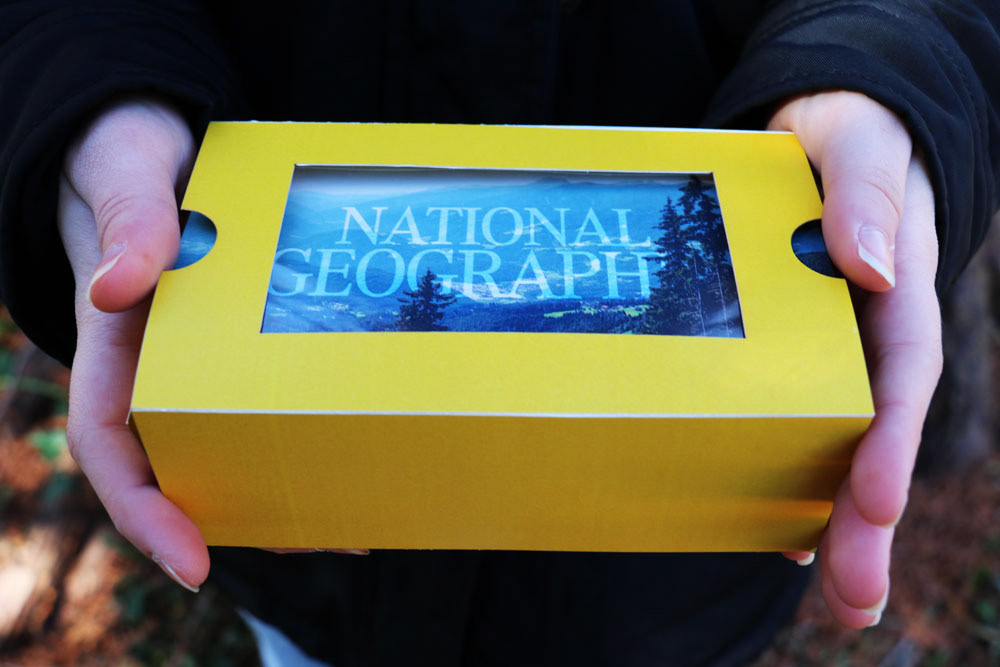
final headset
VR experience
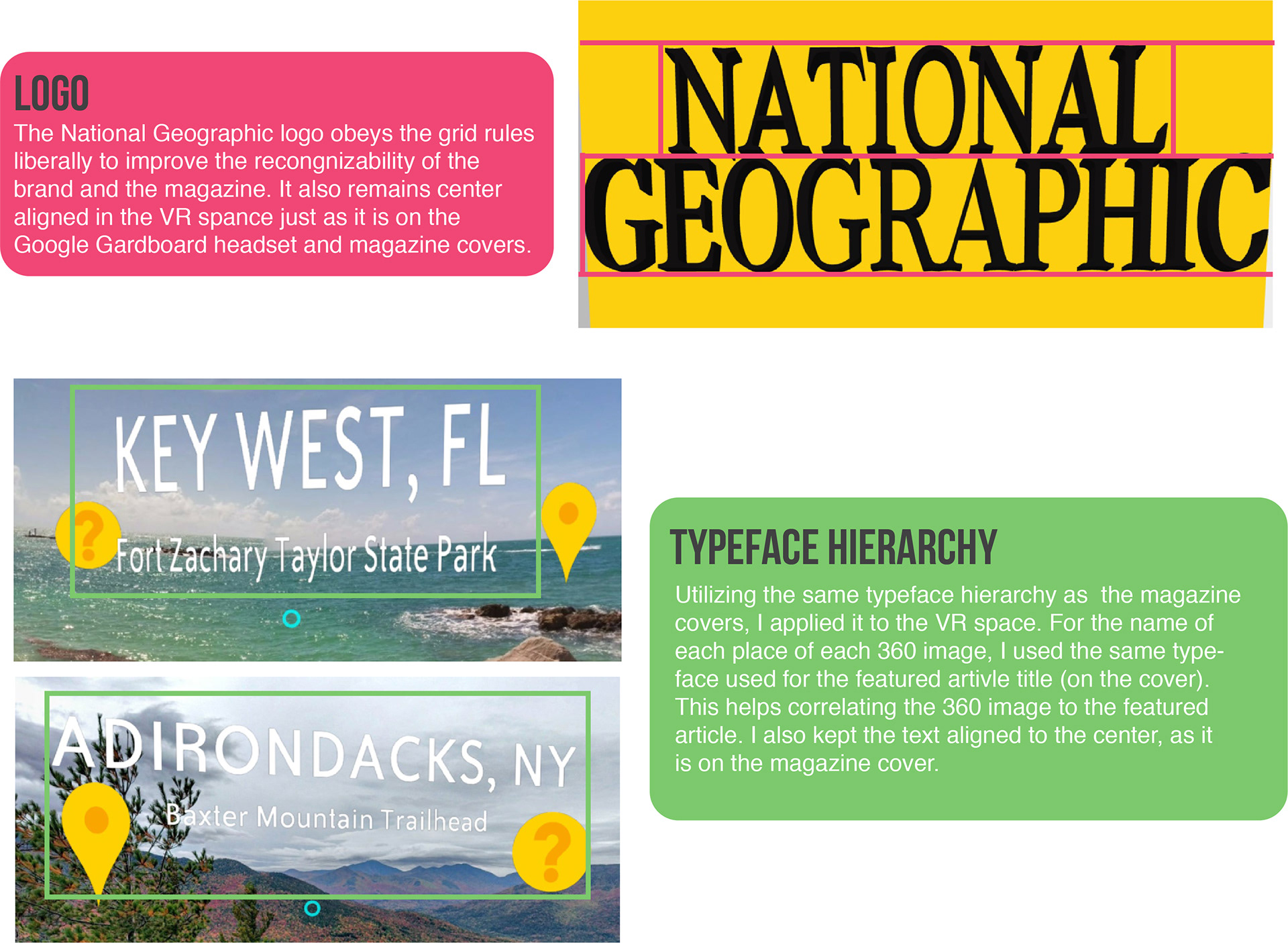
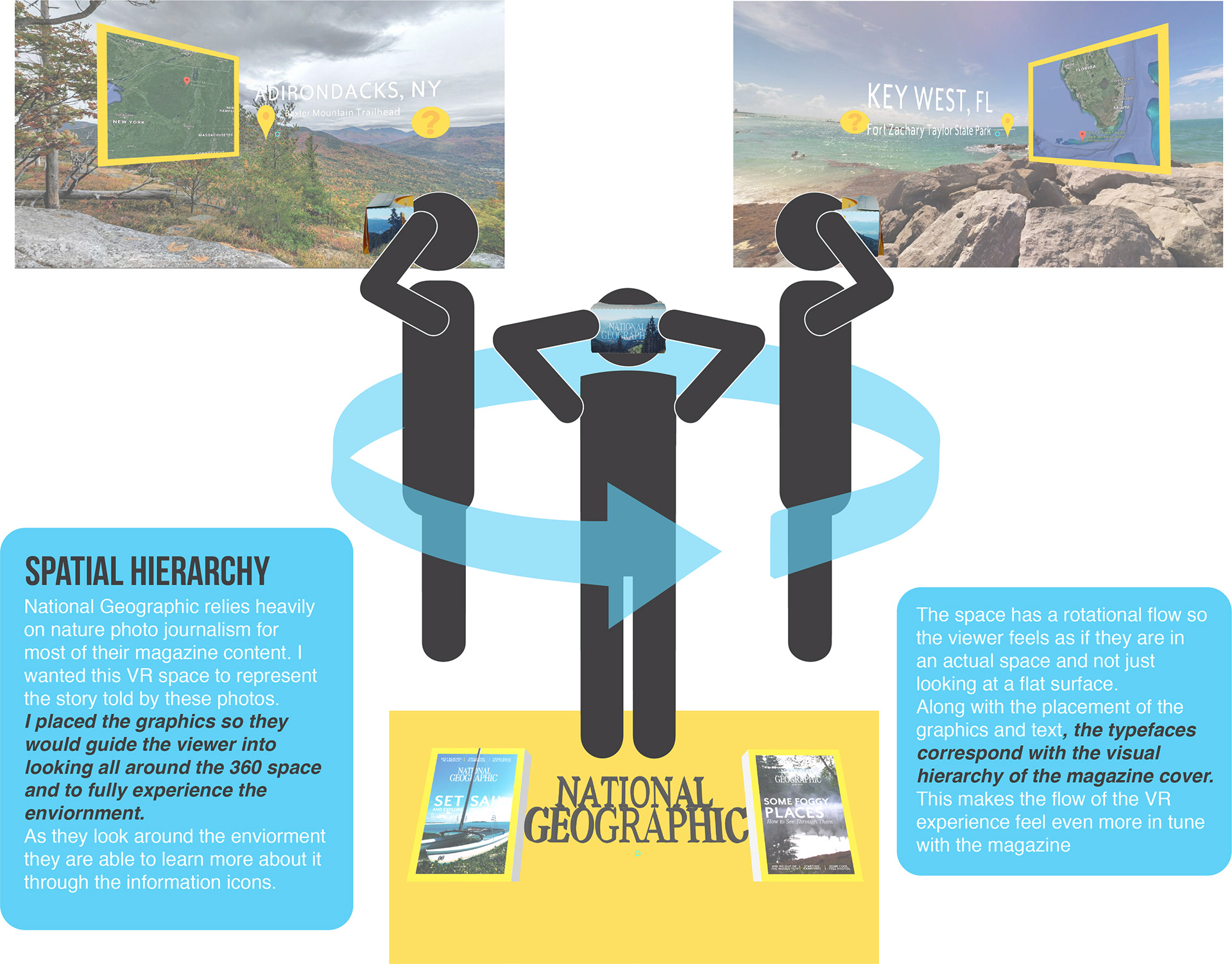
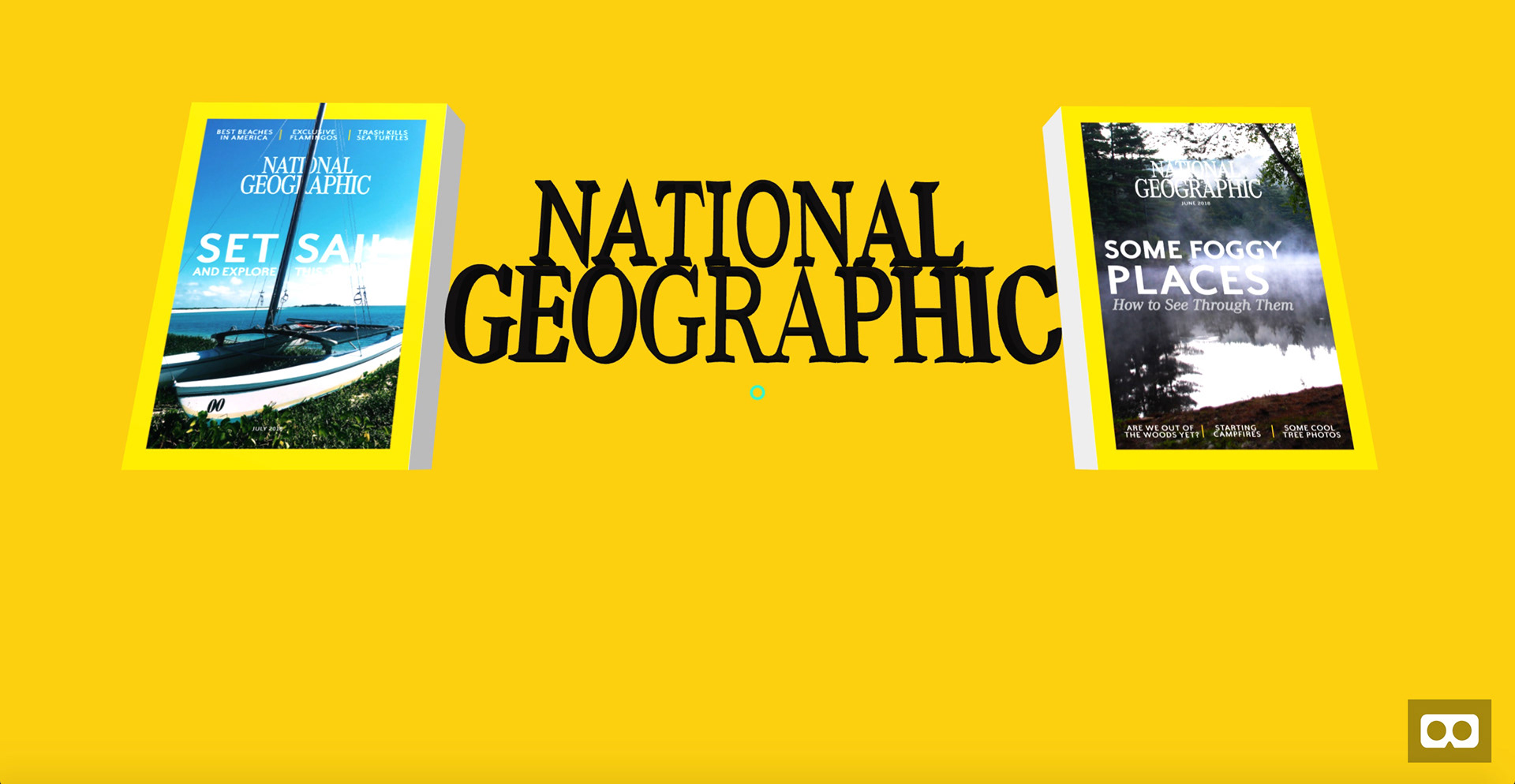
The idea of “seeing beyond the yellow border” heavily influenced my vision for the National Geographic virtual reality experience. I also applied the same grid rules from the magazine covers and the Google Cardboard to the VR to keep visual consistency.
Applications used: A-Frame and Glitch.com
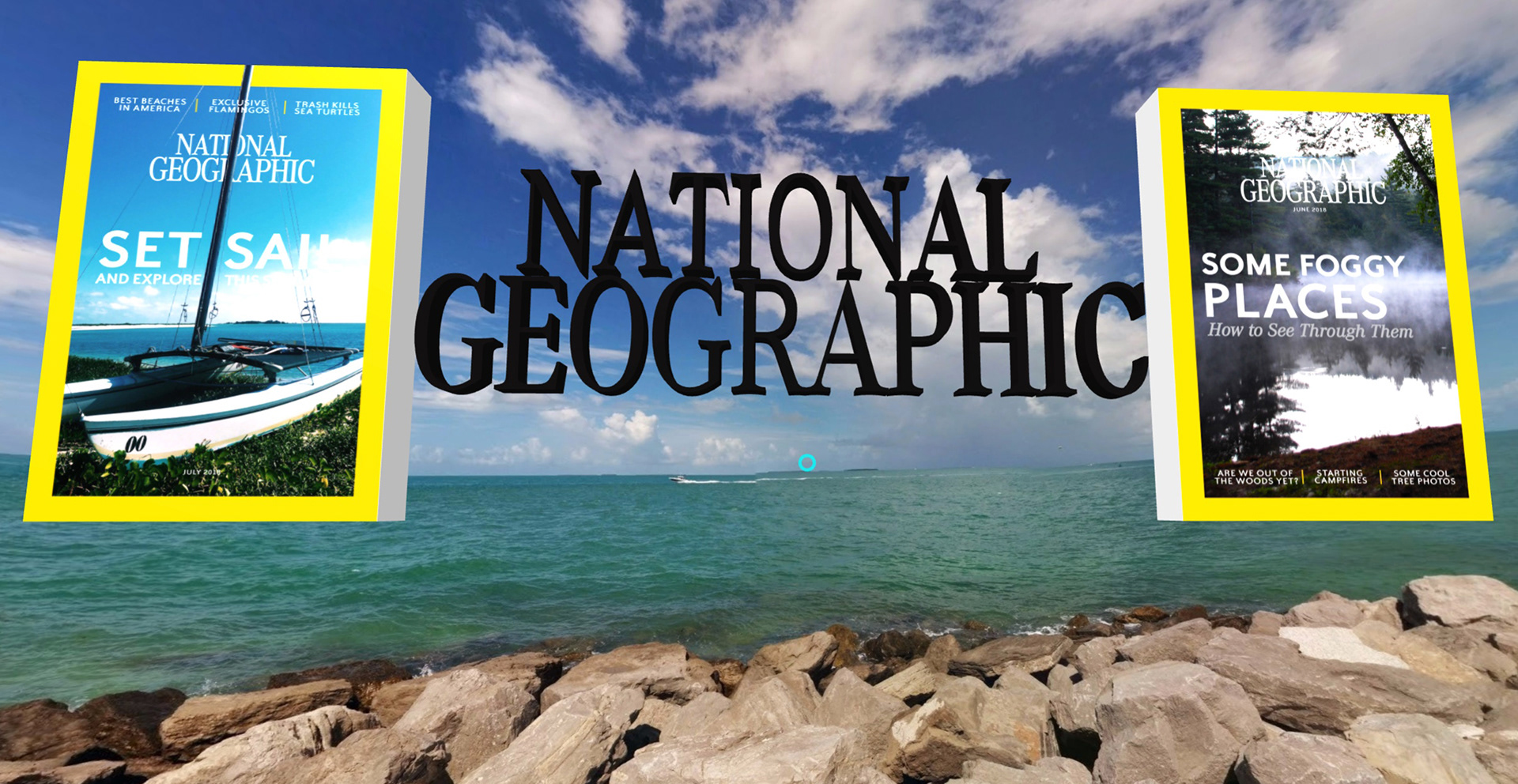
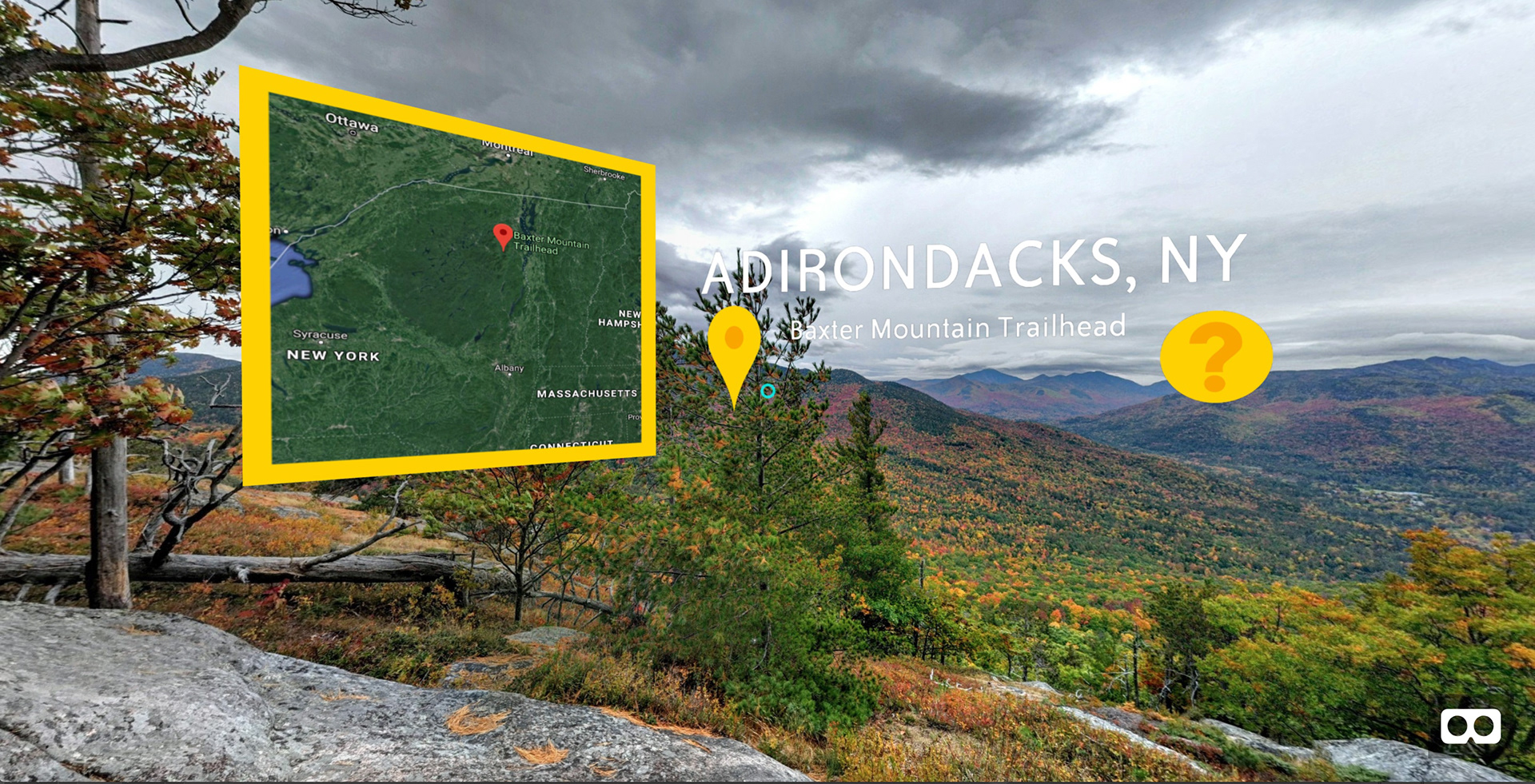
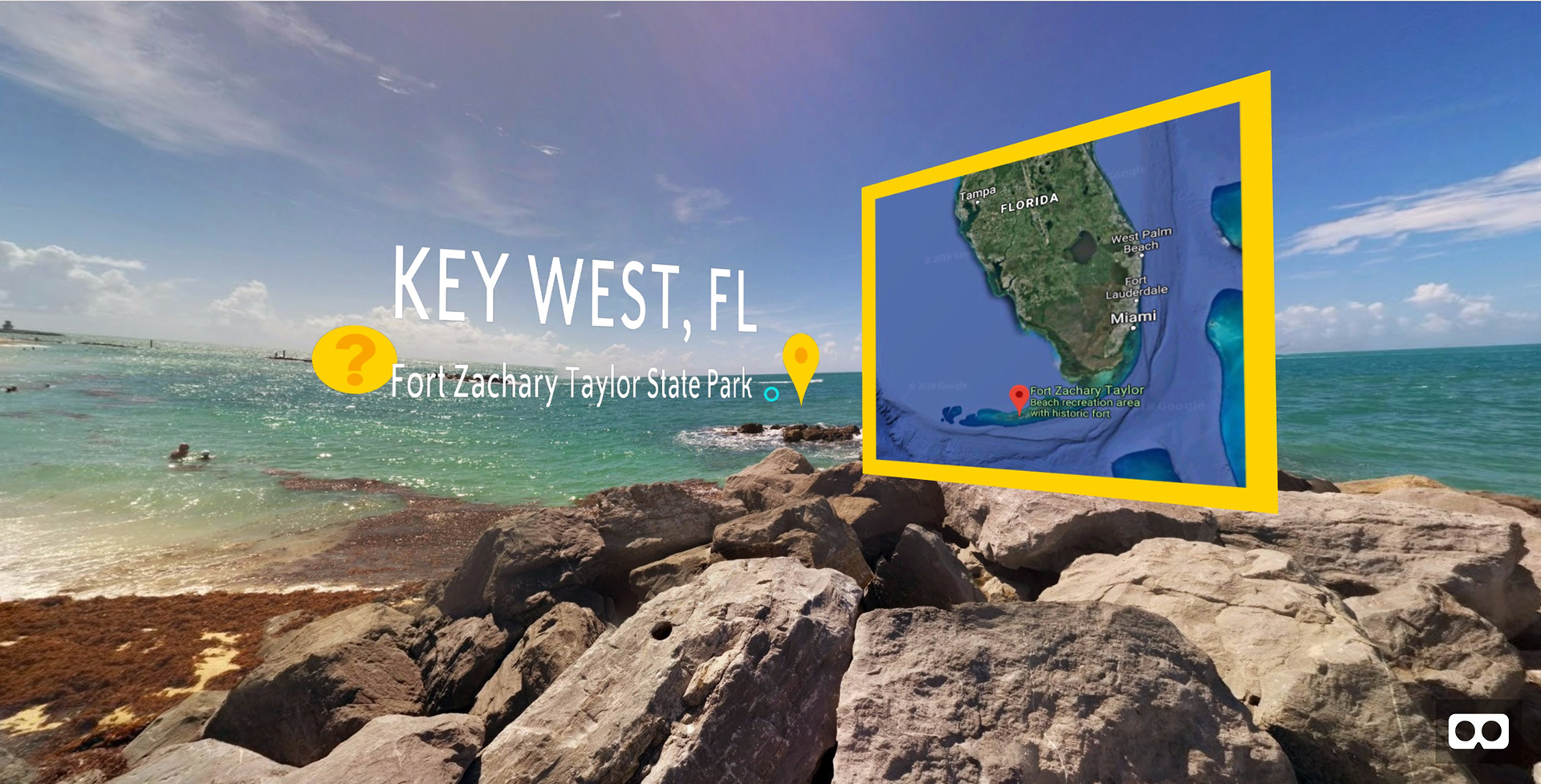
Live VR experience
To view the VR experience live, click the button below. Use your cursor to move around the environment by clicking and dragging. To select, click and drag so the small cyan-colored circle in the middle of the screen hovers over whatever you want to select.
turn up your volume!
AR experience
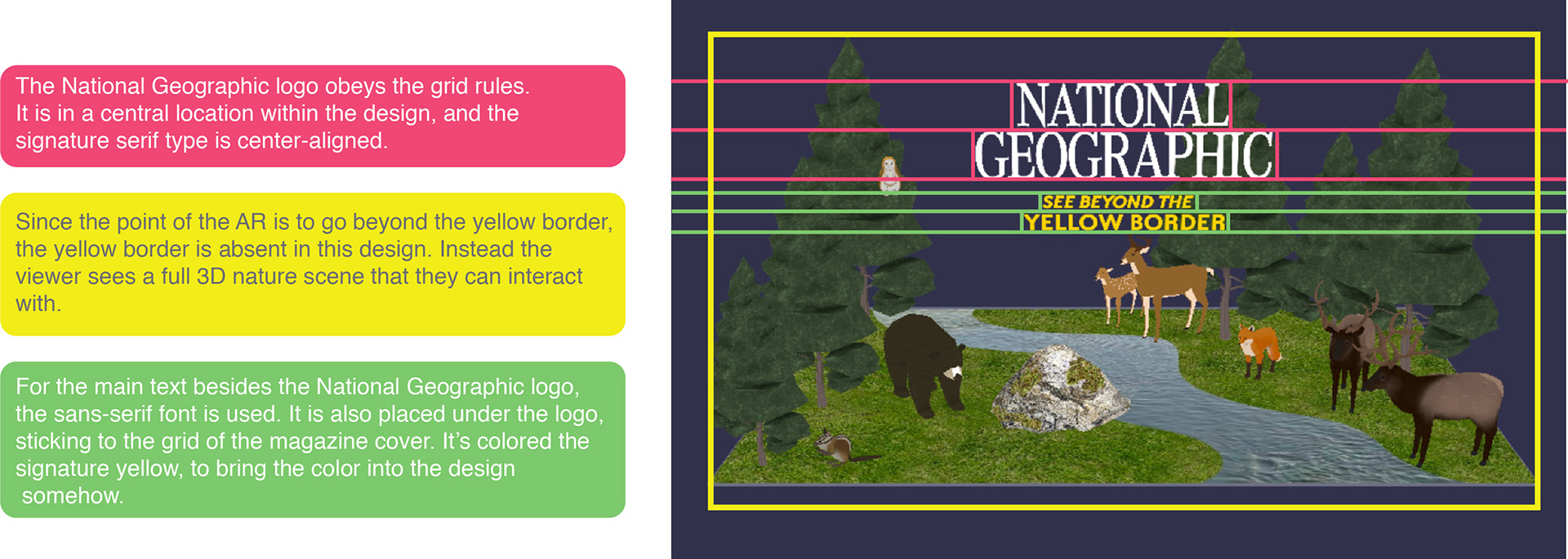
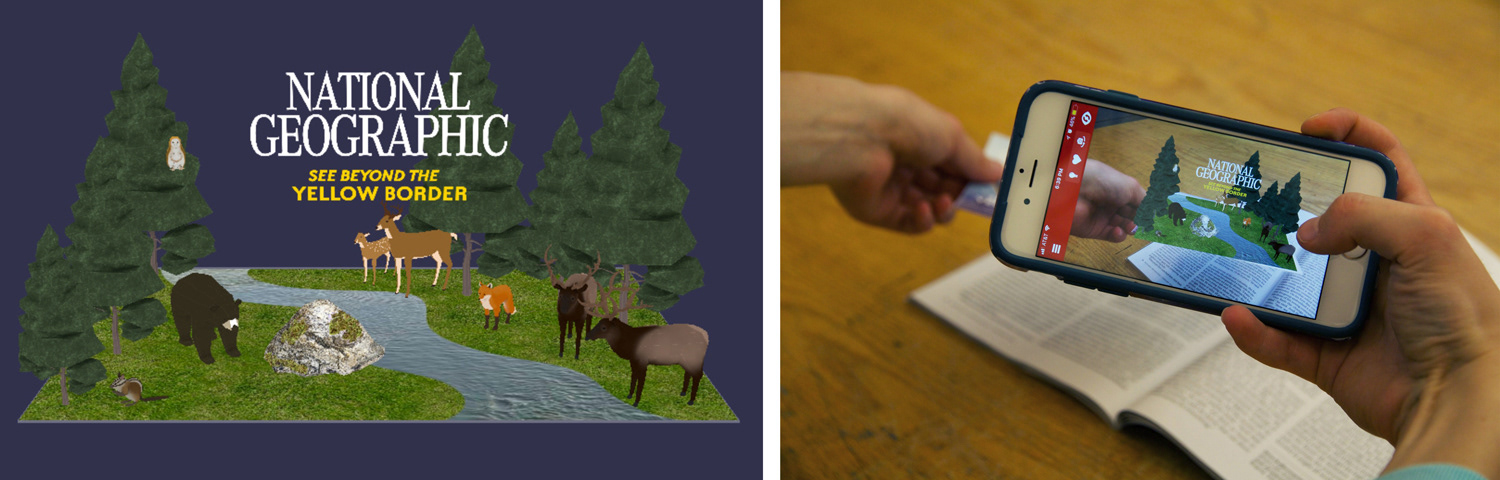
My vision for the augmented reality experience was to be almost a promotion or sneak peek for the actual VR experience. The user is able to scan the subscription card that comes with every magazine to view the AR content via the ZapWorks app.
Application used: ZapWorks
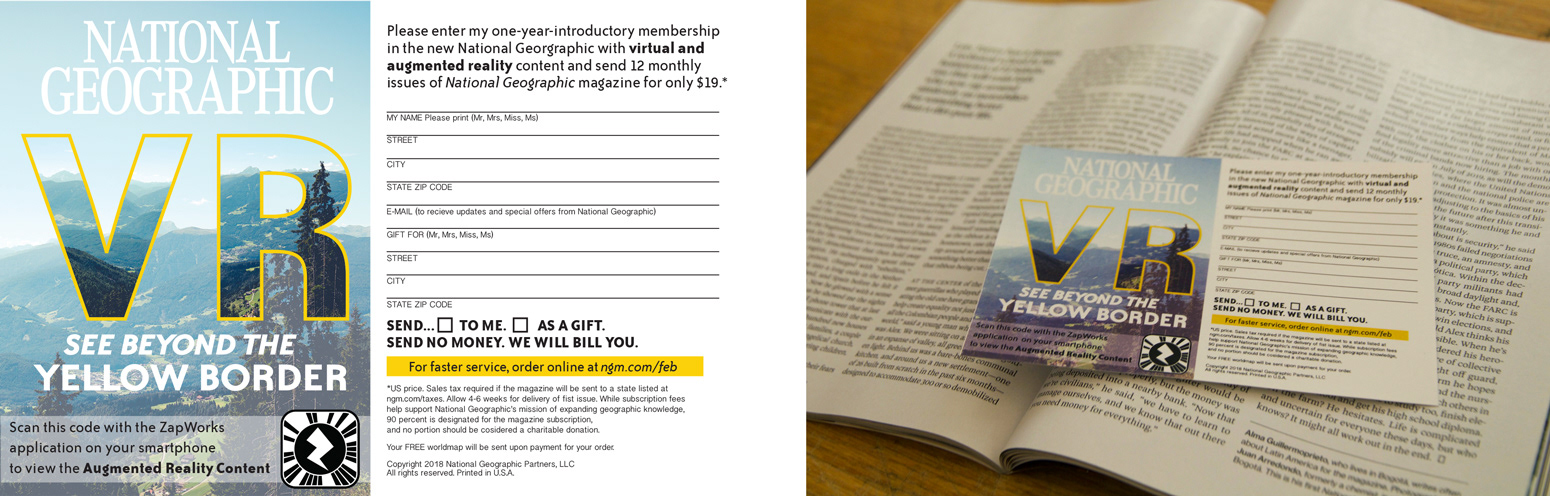
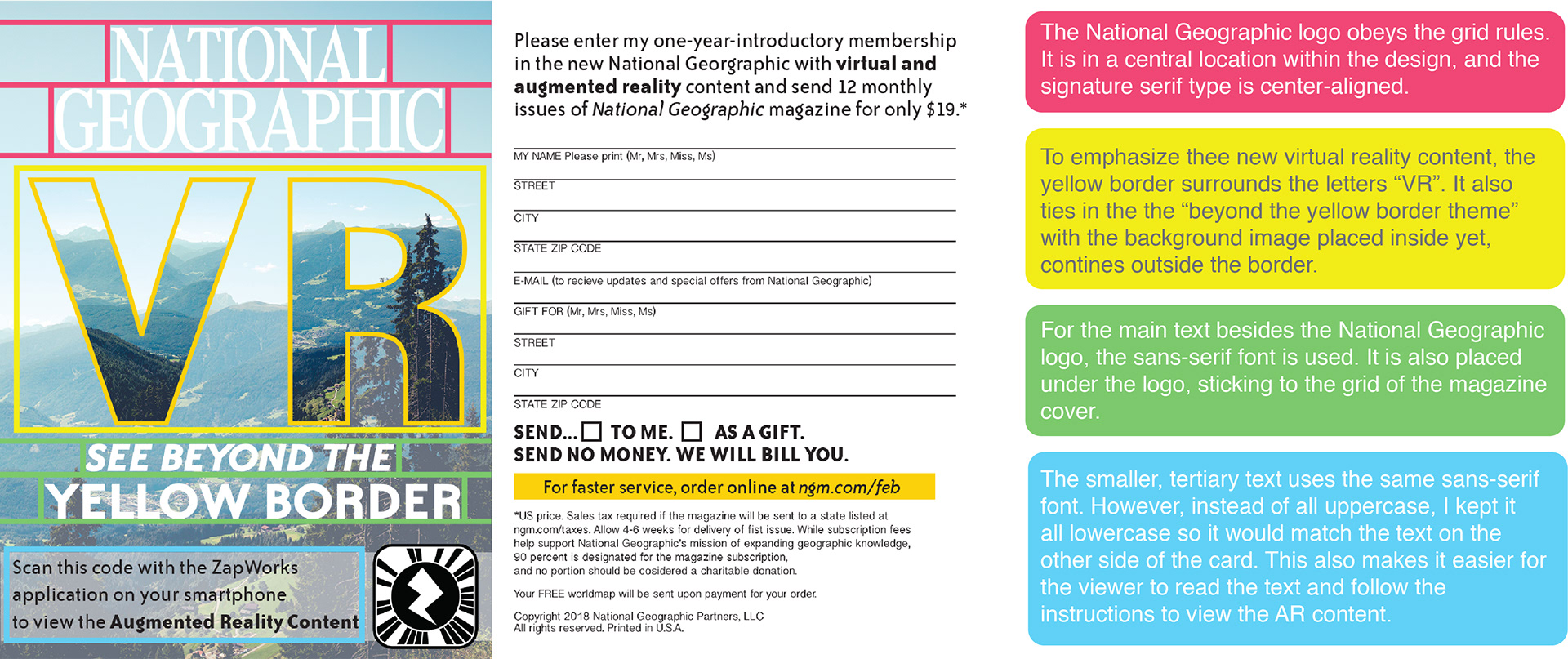
final AR experience